
In the world of commercial trucking in the U.S., maintaining compliance with Hours-of-Service (HOS) regulations is crucial. Since December 2017, much of this compliance depends on using Electronic Logging Devices (ELDs). But not just any ELD will do — it must be certified and registered with the FMCSA. That’s where the FMCSA ELD list comes into play.
In this blog, we’ll cover:
- What the FMCSA ELD list is and why it matters
- How ELD providers get onto (or removed from) the list
- How to use the list when selecting an ELD
- Common compliance pitfalls
- A look at Pacific ELD and how it fits into the ecosystem
What Is the FMCSA ELD List?
The FMCSA (Federal Motor Carrier Safety Administration) maintains an official list of registered, self-certified ELDs. These are devices whose manufacturers declare they meet the technical specifications required by the ELD Rule under 49 CFR §395.
Key points:
- The list is not an FMCSA endorsement — it only means the manufacturer has self-certified compliance.
- The list also includes revoked devices — those that have lost compliance due to technical or operational failures.
- FMCSA can remove devices when deficiencies are found or compliance is lost.
In short, when someone refers to the “FMCSA ELD list,” they’re referring to the public registry of compliant (and revoked) ELDs.
Why the ELD List Matters to Carriers and Drivers
- Legal Compliance
Motor carriers must use an ELD listed on the FMCSA registry to comply with the ELD mandate. Using a revoked or unlisted device may lead to penalties or being placed out of service. - Transparency and Accountability
The list helps carriers verify whether their device is currently compliant and whether a provider is maintaining certification. - Foundation for Evaluation
The FMCSA list is the starting point for selecting an ELD. Once confirmed, carriers can compare pricing, support, and features. - Regular Updates
Since FMCSA occasionally removes non-compliant ELDs, carriers must check the list frequently to ensure their device remains valid.
How ELD Providers Get Listed — and How They’re Removed
The Listing Process
- Design and Testing
The manufacturer designs and tests the device according to FMCSA’s technical specifications. - Self-Certification
The provider then self-certifies the device, confirming that it meets all regulatory requirements. - Registration
After submission, FMCSA includes the device on the public “Registered ELDs” list.
The Removal Process
An ELD can be removed from the list if:
- It fails to meet technical requirements after updates or reviews.
- The manufacturer does not maintain compliance.
- The device’s self-certification is found to be invalid.
- The provider voluntarily requests removal.
Once revoked, carriers are required to stop using the device and replace it with a compliant one within a specified grace period.
How to Use the FMCSA ELD List When Choosing an ELD
Here’s a practical step-by-step method for fleet owners and managers:
- Access the Official FMCSA List
Visit the FMCSA’s ELD registry and view both the “Registered” and “Revoked” lists. - Search by Provider or Device Name
Use the search function to find a specific ELD or provider name. - Check Listing Details
Review information such as the ELD identifier, software version, and provider name. - Monitor Updates
Stay alert for revoked devices or those under investigation. - Evaluate Beyond Listing
Listing is only the starting point — evaluate reliability, customer support, ease of use, and additional features like GPS tracking and data integration. - Ensure Long-Term Compliance
Choose a provider committed to ongoing updates and regulatory maintenance.
Common Pitfalls to Avoid
- Assuming Listing Equals Quality
Being listed doesn’t guarantee strong performance or good customer service. - Neglecting Software Updates
Providers must re-certify after significant changes; lack of updates can lead to revocation. - Delaying Replacement After Revocation
Using a revoked ELD can lead to fines and compliance issues. - Overlooking Inspection Features
The ELD must support data transfer and roadside inspection modes per FMCSA rules.
Pacific ELD: Reliable Compliance and Fleet Efficiency
Now, let’s focus on Pacific ELD, a trusted name in the electronic logging and fleet management space.
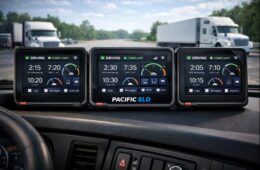
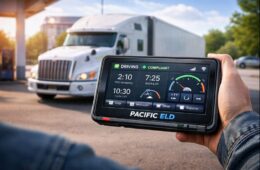
Pacific ELD provides advanced, easy-to-use ELD solutions designed to simplify compliance, improve operational efficiency, and enhance driver experience. The company emphasizes:
- Real-time GPS tracking and trip history
- Seamless Hours-of-Service recording
- Automatic log updates and DVIR support
- 24/7 customer assistance for drivers and fleet managers
- Integration with IFTA and permit management tools
Pacific ELD aims to deliver more than just compliance — it offers complete visibility into fleet operations. Whether you manage a small business or a large fleet, Pacific ELD ensures that your drivers stay compliant, connected, and confident on the road.
Before deployment, carriers should always verify that their chosen ELD — including Pacific ELD — appears on the official FMCSA Registered ELD list and remains in active status.
Steps to Verify Pacific ELD on the FMCSA List
- Visit the FMCSA ELD registry.
- Search for “Pacific ELD” under the Registered ELDs section.
- Check listing details such as ELD identifier and provider name.
- Confirm that it is not listed under Revoked ELDs.
- Keep a copy of verification for compliance records.
Industry Trends to Watch
- Frequent Removals
FMCSA has periodically removed multiple ELDs due to non-compliance, showing that vigilance is vital. - Technology Advancements
ELDs are now evolving into full-scale fleet management systems, integrating GPS, maintenance, and analytics features. - Data Security and Cyber Compliance
FMCSA increasingly emphasizes data protection and transmission security — factors that Pacific ELD prioritizes. - Driver-Friendly Designs
Modern ELDs are focusing on user experience to minimize HOS violations and reduce administrative work.
Conclusion
The FMCSA ELD list is a vital compliance tool for all commercial carriers. It ensures that ELDs used on U.S. roads meet strict federal requirements. However, compliance alone isn’t enough — reliability, customer support, and continuous certification matter just as much.
Pacific ELD stands out as a dependable, FMCSA-compliant solution that helps fleets simplify operations, avoid penalties, and maintain transparency.
If you’re seeking a trusted, feature-rich ELD system that keeps your fleet fully compliant, Pacific ELD is a smart choice.